Difference between POS and Inventory Management System
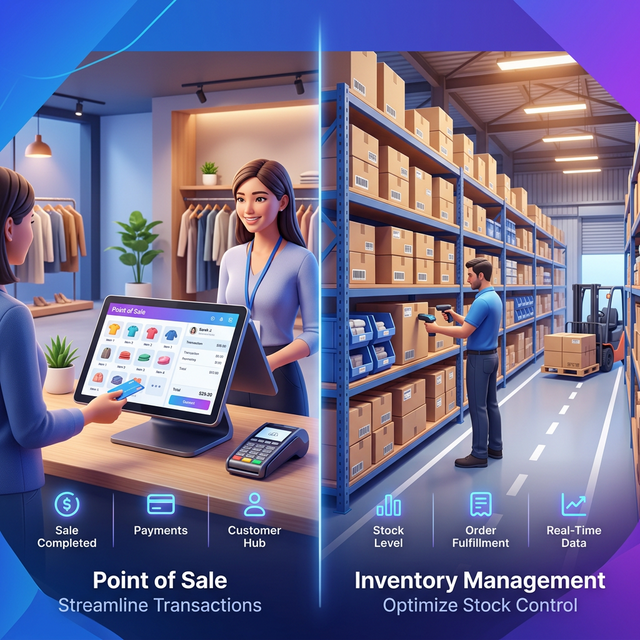
While POS (Point of Sale) and Inventory Management systems often work together, they serve distinctly different primary functions for retail businesses. Understanding their differences is key to choosing the right software stack for your business.
Point of Sale (POS) Systems
A POS system is primarily a customer-facing piece of software used to process transactions. It is where your customer pays for goods or services. * **Primary Function**: Calculating total order costs, processing payments, and printing receipts. * **Key Users**: Cashiers, sales associates, and retail managers. * **Core Features**: Checkout interfaces, payment gateway integrations, barcode scanning for sales, and daily sales summaries.
Inventory Management Systems
An inventory management system is a back-office tool used to track goods from the moment they are ordered from a supplier to the moment they are sold. * **Primary Function**: Tracking stock levels, managing purchase orders, and minimizing stockouts or overstocking. * **Key Users**: Warehouse managers, procurement teams, and store owners. * **Core Features**: Low stock alerts, supplier management, stock audits, cost of goods sold (COGS) tracking, and multi-location inventory synchronization.
The Intersection
Modern retail solutions often combine both. When a cashier rings up a sale on the POS, the integrated inventory management system automatically deducts the sold item from the stock count. This unified approach eliminates manual data entry and ensures your stock levels are always accurate.